
There’s a particular kind of joy that settles over a household in the days before Ganesh Chaturthi. Homes get cleaned corner to corner, a spot is cleared for the idol, and somewhere a child is already asking how many days Bappa will stay this time. It’s less a festival on the calendar and more a homecoming everyone has been quietly waiting for.
Ganesh Chaturthi 2027
Ganesh Chaturthi 2027 falls on Saturday, 4 September 2027. It marks the birth of Lord Ganesha and opens the ten-day Ganeshotsav, which closes with the idol immersion on Anant Chaturdashi, Tuesday, 14 September 2027.
Hindus celebrate it right across India, but the grand public version — the street pandals, the towering idols, the immersion processions — is strongest in Maharashtra, Goa, Karnataka, Telangana, Andhra Pradesh and Tamil Nadu.
This guide walks you through everything for 2027: the date and timings, the puja steps, a full samagri list, regional differences, and practical planning tips. We’ve deliberately kept the details that change each year separate from the parts that stay the same, so the page is easy to trust and easy to update.
Quick Festival Information (2027)
| Detail | Information |
|---|---|
| Festival | Ganesh Chaturthi (Vinayaka Chaturthi / Vinayaka Chavithi / Ganeshotsav) |
| Date in 2027 | Saturday, 4 September 2027 |
| Day | Saturday |
| Hindu date | Bhadrapada, Shukla Paksha, Chaturthi |
| Main deity | Ganesha (Ganapati, Vinayaka) |
| Madhyahna puja window (New Delhi) | Approx. 11:04 AM to 1:36 PM IST (varies by city) |
| Visarjan / Anant Chaturdashi | Tuesday, 14 September 2027 |
| Duration | 1.5, 3, 5, 7 or 10 days, by family and regional custom |
| Main regions | Maharashtra, Goa, Karnataka, Telangana, Andhra Pradesh, Tamil Nadu |
| Public holiday | Yes in several states; status varies |
A quick note on timings: The puja muhurat above is calculated for New Delhi. Because the festival follows the lunar tithi, the exact window shifts by location. Always confirm the muhurat for your own city on a panchang close to the date, rather than relying on figures published months ahead.
Ganesh Chaturthi 2027 Date and Timings
The date. The festival is on Saturday, 4 September 2027, falling on the Chaturthi tithi of the bright fortnight (Shukla Paksha) in the month of Bhadrapada.
Because the date is lunar, it drifts against the English calendar every year. In 2026 it fell on 14 September, so 2027 arrives about ten days earlier. Looking ahead, 2028 is expected around 23 August — the same familiar shift.
Why midday matters. Most Hindu festivals follow the tithi at sunrise, but Ganesh Chaturthi is an exception. It follows the Madhyahna, or midday, rule, because tradition places Ganesha’s birth around noon. That’s why the idol installation and the main puja are performed in the midday window rather than at dawn.
Key timings for 2027. The main puja window in New Delhi runs from roughly 11:04 AM to 1:36 PM, shifting by 10 to 30 minutes in other cities. Visarjan falls on 14 September, though plenty of families choose to immerse on the 1.5th, 3rd, 5th or 7th day instead.
The moon-sighting tradition. By custom, people avoid looking at the moon on this night, as it’s believed to bring false blame, or mithya dosha. Anyone who spots it by accident traditionally recites the Syamantaka katha as a remedy. It’s a devotional belief rather than a rule everyone follows.
What Is Ganesh Chaturthi?
Ganesh Chaturthi celebrates the birth of Ganesha — the elephant-headed god worshipped as the remover of obstacles and the lord of beginnings. He is the deity people turn to first, before starting new work, a journey, a wedding or their studies.
During the festival, a clay idol of Ganesha is brought home or installed in a community pandal. It’s welcomed with a life-invoking ritual, worshipped each day with flowers, sweets and aarti, and finally immersed in water when the celebration ends. That immersion marks Ganesha’s return home, carrying away the troubles of his devotees with him.
The festival lives on two scales at once. In many homes it’s a quiet family puja lasting a day or a few days. In cities like Mumbai and Pune, it’s also a ten-day public spectacle of giant idols and street processions.

History and Origin
Three things tend to get tangled together here — the birth myth, the age of Ganesha worship, and the history of the public festival. They aren’t the same thing.
The birth story. The most familiar version tells how Parvati created a boy from turmeric or sandalwood paste and set him to guard her door. Shiva, not recognising him and refused entry, cut off the boy’s head in anger. Seeing Parvati’s grief, he revived the child with an elephant’s head. This is a religious story from the Puranas and folk tradition — a matter of belief rather than verified history, and several versions exist.
The age of the worship. Ganesha himself is an ancient deity, appearing in Puranic texts and temple carvings across many centuries, with Chaturthi long treated as his sacred tithi. In other words, the worship of Ganapati is far older than the modern festival.
The public festival. The pandal-based Ganeshotsav we know today owes much to Bal Gangadhar Tilak, who from around 1893 championed large public celebrations in Maharashtra. Under British rule, public gatherings were restricted, and a religious festival offered a legal way for people to come together and build unity. Public Ganesha worship already existed under the earlier Peshwa rulers, but Tilak transformed it into a mass, organised, city-wide event. This part is documented history, not myth — and it explains why the biggest spectacle remains centred on Maharashtra.
Religious and Cultural Significance
Ganesha is invoked at the start of any undertaking, and the festival renews that blessing for a home or community once a year. Since Tilak’s revival, the public celebration has also been a moment of shared participation that reaches across neighbourhoods and, often, across class lines.
Its timing matters too. The festival arrives at the tail end of the monsoon across much of India — a season historically woven into the farming cycle.
Ganesha’s form is read as a set of gentle symbols: the large head for wisdom, the big ears for listening, the small mouth for measured speech, and the mouse for keeping desire in check. These are interpretations offered by tradition, not fixed doctrine.
Main Rituals and Traditions
The core steps are broadly shared, even as the finer details change from family to family and region to region.
Sthapana. The idol is placed on a decorated platform, usually in the midday window.
Prana Pratishtha. A ritual to invoke Ganesha’s living presence into the idol.
Shodashopachara Puja. A sixteen step offering. It includes bathing, dressing, flowers, incense, lamp and food. Durva grass and red hibiscus are the favoured offerings for Ganesha.
Daily worship. For the days the idol stays, families do morning and evening aarti and offerings. “Sukhkarta Dukhharta” is the aarti most linked to Maharashtra.
Uttar Puja and Visarjan. On the last day, a farewell puja comes before the idol is carried out and immersed, with chants of “Ganpati Bappa Morya.”
Where practices differ, treat your family or local priest as the authority, not any single online version.
How to Celebrate Ganesh Chaturthi at Home
You don’t need a grand setup to welcome Bappa well. A heartfelt home puja is complete on its own.
- Clean the space for the idol a day or two before.
- Choose the idol carefully. Unbaked clay (shadu) is now preferred over plaster of Paris, because it immerses cleanly.
- Set up the platform with a clean cloth, rangoli, flowers and a small backdrop, keeping your puja items within easy reach.
- Perform the installation and main puja in the midday window on 4 September. If there’s no priest, keep it simple — durva, flowers, a lamp, incense and modak are the true heart of it.
- Offer food daily and do aarti twice a day for as long as the idol stays.
- Decide the number of days before you begin, so your shopping, cooking and immersion all line up smoothly.
Ganesh Chaturthi Puja Vidhi
This is a general outline. Steps and mantras vary. Follow your family tradition or a priest where you can.
- Bathe, wear clean clothes, clean the puja area, light the lamp.
- State the intention of the puja (Sankalpa).
- Place the idol facing the direction your tradition prefers.
- Do Prana Pratishtha to invoke Ganesha.
- Offer the sixteen steps, ending with durva, flowers, incense, lamp and modak.
- Sing the aarti and offer the final lamp.
- Share the prasad with family and visitors.
Do not treat one online script as the only correct way. The tradition is genuinely varied.
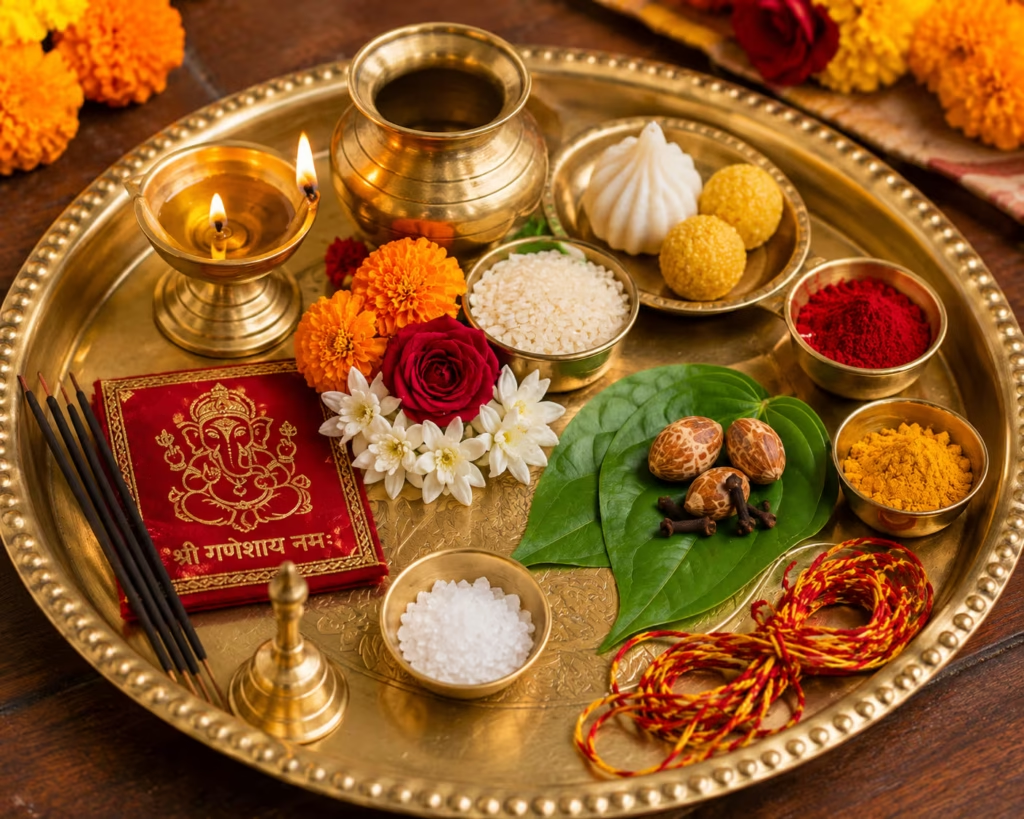
Ganesh Chaturthi Samagri / Items Checklist
Make the Ganesh Chaturthi Samagri Item Checklist here
Puja items
- Ganesha idol (clay preferred)
- Wooden chowki and clean cloth
- Kalash, coconut, betel leaves, supari
- Durva grass and red flowers
- Roli, haldi, akshat (rice), chandan
- Incense, camphor, oil or ghee lamp, wicks
- Panchamrit items: milk, curd, ghee, honey, sugar
Decoration
- Flowers, garlands, mango or banana leaves
- Rangoli colours
- Backdrop cloth or makhar
Food and prasad
- Modak (steamed or fried)
- Fruits, jaggery, sweets
- Ingredients for any regional dish you plan to make
Other
- Aarti lyrics
- Bell
- Immersion setup: a bucket or tub for home, or a local immersion site
Buy flowers, fruit, durva and leaves fresh on or near the day.
Food, Prasad and Traditional Dishes
If there’s one dish inseparable from Ganesha, it’s modak — his favourite sweet. The classic is ukadiche modak, a steamed rice-flour dumpling filled with jaggery and coconut, especially beloved in Maharashtra. Fried modak, motichoor and besan ladoo are common too.
Beyond that, the spread turns regional. Maharashtra adds puran poli and rice dishes; parts of the south offer kozhukattai (the Tamil modak) and sundal, a seasoned legume dish. Modak is the common thread everywhere — but the full menu varies, so don’t assume any single dish is universal.
Regional Celebrations in India
Maharashtra. The heart of the public festival. Home idols sit alongside large community pandals, ten days of programmes, and big immersion processions in Mumbai and Pune. “Ganpati Bappa Morya” is the signature chant.
Goa. Known as Chavath. Strong home traditions, the matoli canopy of local produce hung above the idol, and family gatherings over public pandals.
Karnataka. Observed as Gowri-Ganesha. The worship of Gauri, or Parvati, the day before flows into Ganesha’s arrival the next day.
Andhra Pradesh and Telangana. Called Vinayaka Chavithi. Big public celebrations. Hyderabad’s Khairatabad idol is one of the tallest in the country, with immersion at Hussain Sagar.
Tamil Nadu. Called Vinayagar Chaturthi. More home and temple based, with kozhukattai and sundal as key offerings.
Gujarat, Madhya Pradesh and parts of the north. Celebrated in homes and by communities. Public pandals are growing in cities but stay smaller than in Maharashtra.
Only regions with an established tradition are listed. The public intensity really does vary across India.
Ganesh Chaturthi Outside India
Hindu communities in Nepal and the diaspora celebrate too. This includes the US, UK, Canada, Australia, Singapore, Malaysia and the UAE. They hold home pujas and temple or community events.
The civil date abroad can fall a day earlier or later than India, because the tithi is worked out in local time. Always check a panchang for that country. The scale abroad is community sized, not the city wide event seen in Maharashtra.
Ganesh Chaturthi 2027: Ten-Day Calendar
Most households do not keep the idol for all ten days; this calendar shows the full public cycle for reference.
| Date (2027) | Day | Occasion | What happens |
|---|---|---|---|
| 4 Sep | Saturday | Ganesh Chaturthi | Sthapana and main puja; idols installed |
| 5 Sep | Sunday | Day 2 | Daily worship; 1½-day idols immersed |
| 6 Sep | Monday | Day 3 | 3rd-day immersions |
| 8 Sep | Wednesday | Day 5 | Common 5th-day immersions |
| 10 Sep | Friday | Day 7 | 7th-day immersions |
| 14 Sep | Tuesday | Anant Chaturdashi | Final large-scale visarjan; the biggest public processions |
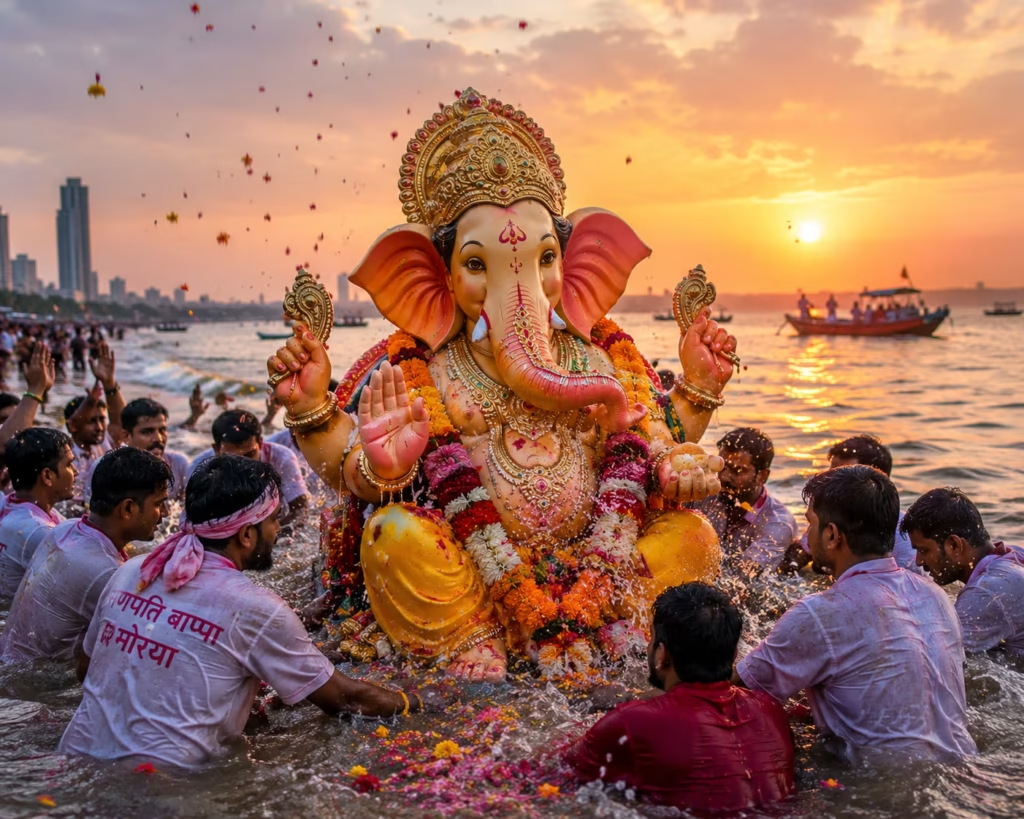
Immersion days vary by household and mandal; the ones above are the most common choices.
Preparation Checklist
- Decide how many days you will keep the idol
- Book a clay idol early. They sell out.
- Clean and set up the puja space
- Buy non perishable samagri in advance
- Buy flowers, durva, fruit and leaves near the day
- Plan the modak and prasad menu
- Confirm your city’s puja muhurat on a panchang
- Arrange your immersion method and location
- Coordinate with family or your building for shared celebration
Traditional vs Modern, Eco Friendly and Safe Celebration
The home puja is old. The ten day pandal culture, sound systems and giant idols are mostly modern additions. There is now a strong push back toward smaller, quieter and cleaner celebration.
Eco friendly steps
- Choose clay (shadu) idols over plaster of Paris, which does not dissolve well and harms water.
- Use natural colours and biodegradable decorations.
- Immerse at home in a bucket or tank where you can, and use the clay for plants. Or use the artificial immersion tanks many cities provide.
- Cut plastic and manage food waste.
Safety
- Keep lamps and camphor flames away from cloth, garlands and children.
- Stay alert in dense immersion crowds. Keep children close.
- Water safety matters most. Immersions cause drownings every year. Never enter deep or fast water, watch children closely, and use official immersion points.
- Handle prasad hygienically in the humid weather.
Public Holiday Information
Ganesh Chaturthi is a public holiday in several states. These include Maharashtra, Goa, Gujarat, Karnataka, Andhra Pradesh, Telangana and Tamil Nadu, among others.
In much of the north it is a restricted, or optional, holiday. Holiday status is set state by state and can change. Check your state’s official 2027 calendar and your bank, school or office policy. Do not assume a nationwide holiday.
Famous Ganesh Chaturthi Celebrations
- Lalbaugcha Raja (Mumbai) — among the most visited community idols in the country, drawing very large crowds over the ten days.
- Pune — historically central to the public festival; several long-established mandals hold prominent processions.
- Khairatabad Ganesh (Hyderabad) — famous for one of the tallest idols, with immersion at Hussain Sagar.
- Goa’s Chavath — known for home traditions and the matoli canopy rather than large pandals.
For 2027-specific event dates, timings and darshan arrangements, check the individual mandals’ official announcements closer to the festival, as these are confirmed each year.
Ganesh Chaturthi Wishes and Messages (Original)
Short
- May Bappa clear every obstacle from your path this year. Ganesh Chaturthi 2027.
- Wishing you a bright and blessed Ganeshotsav.
Family
- May our home stay full of health, patience and small joys — happy Ganesh Chaturthi to all of us.
- As Bappa arrives, may every worry leave with him at visarjan. Love to the whole family.
Formal
- Warm wishes on Ganesh Chaturthi 2027. May the season bring you clarity in decisions and success in new beginnings.
- On this Ganeshotsav, our best wishes to you and your team for a smooth and prosperous year ahead.
Social media
- New beginnings, fewer obstacles, more modak. Ganpati Bappa Morya!
- He arrives, we celebrate, he takes our troubles with him. Happy Ganesh Chaturthi 2027.
FAQ
When is Ganesh Chaturthi in 2027? Saturday, 4 September 2027, with visarjan on Anant Chaturdashi, Tuesday, 14 September 2027.
What is the puja muhurat for 2027? The midday (Madhyahna) window in New Delhi is approximately 11:04 AM–1:36 PM IST. It varies by city, so confirm on your local panchang near the date.
Why does the date change every year? It follows the lunar Hindu calendar (Bhadrapada Shukla Chaturthi), which does not line up with the Gregorian calendar, so the date drifts each year.
How many days does the festival last? Anywhere from 1½ to 10 days. Households keep the idol for 1½, 3, 5, 7 or 10 days by custom; the public festival runs the full ten.
Why is the moon not seen on this day? By tradition, seeing the moon on Ganesh Chaturthi night is believed to bring false blame (mithya dosha), based on the Syamantaka story. It is a devotional belief, not a universal rule.
What food is offered to Ganesha? Modak is the signature offering. Regional additions include kozhukattai and sundal in the south and puran poli in Maharashtra.
Can Ganesh Chaturthi be celebrated at home? Yes — a simple home puja with a clay idol, durva, flowers, a lamp and modak is complete on its own.
Which states celebrate it most? Maharashtra, Goa, Karnataka, Telangana, Andhra Pradesh and Tamil Nadu have the strongest traditions.
Is it a public holiday? It is a public holiday in several states and a restricted holiday in others. Check your state’s official 2027 calendar.
What idol should I buy? An unbaked clay (shadu) idol is the eco-friendly choice, as it dissolves cleanly at immersion.
What is the difference between Ganesh Chaturthi and Vinayaka Chavithi? They are the same festival; Vinayaka Chavithi/Chaturthi is the name used mainly in the southern states.